
Truss connector plate installation involves two methods: machine installation and manual installation.
Machine installation uses hydraulic presses or roller presses to drive the metal teeth into the wood. Manual installation uses hand tools, such as hammers, to gradually embed the teeth into the wood. The choice of method depends on the type of connector plate and its installation requirements.
This guide explains the tools required for each method and outlines the basic installation steps.
Truss Plate Installation Tools and Materials Needed
Before installing truss connector plates, choose the appropriate truss plate installation tools based on the connector type and installation method.
| Tools and Materials | Press Installation | Manual Installation |
| Suitable Toothed Metal Connector Plates | ✓ | ✓ |
| Hydraulic Press / Roller Press | ✓ | — |
| Hammer or Other Specified Installation Tool | — | ✓ |
| Measuring Tape | ✓ | ✓ |
| Truss Assembly Jig | ✓ | — |
| Wood Clamps | — | ✓ |
| Safety Equipment | ✓ | ✓ |
How to Install Truss Connector Plates with a Press
In prefabricated wood truss manufacturing, structural truss connector plates are typically installed using hydraulic presses or roller presses. These machines apply controlled pressure to embed the metal teeth into the wood, securely joining the timber members together.
Cut the timber members according to the truss design drawings. Arrange them on the assembly table and use truss assembly jigs to hold them in position, ensuring the joints are properly aligned.
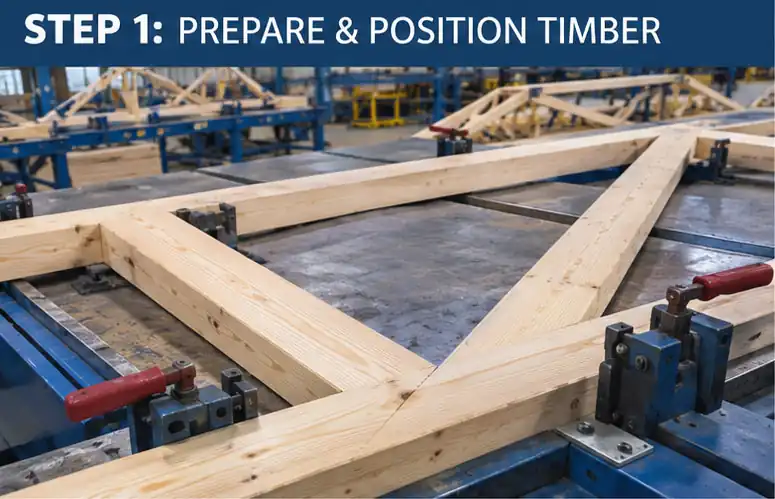
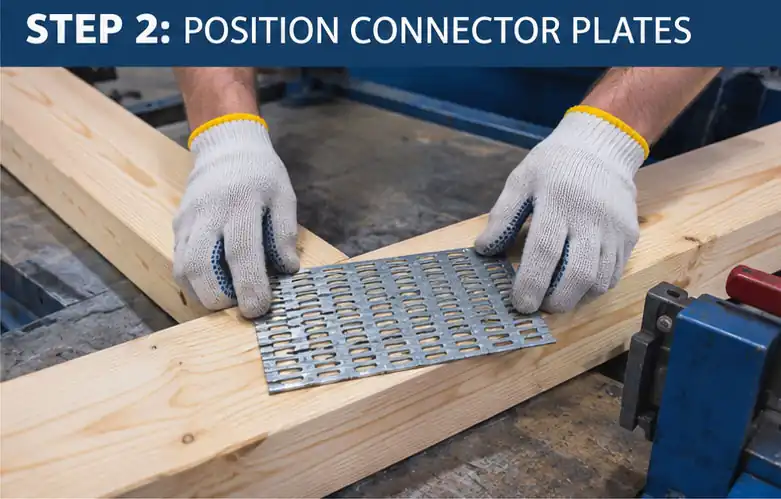
Select the appropriate toothed connector plates according to the truss design drawings.
Place each plate across the designated joint, making sure it covers the timber members as specified in the design.
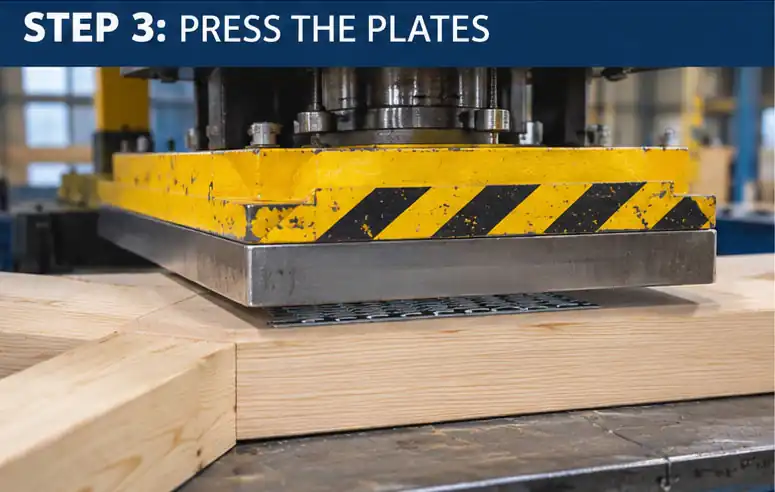
Use a hydraulic press or roller press to embed the metal teeth into the wood.
Follow the specified pressing procedure to ensure the plates are properly seated and the teeth meet the required embedment criteria.
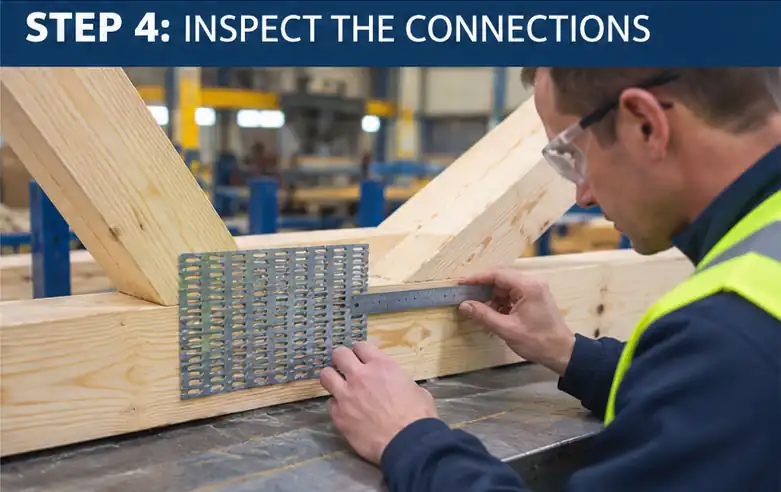
After pressing, check the plate placement, tooth embedment, and alignment of the timber members.
Look for visible plate deformation, excessive gaps between timber members, or other installation defects.
Installing Toothed Metal Connector Plates Without a Press
In small DIY woodworking projects, hydraulic presses or roller presses may not be available. In such cases, you may attempt to install toothed metal connector plates by hammering them into the wood.
Align the timber members and make sure they fit together correctly at the joint.
Place the toothed connector plate over the joint and use woodworking clamps to hold the timber members in place during installation.
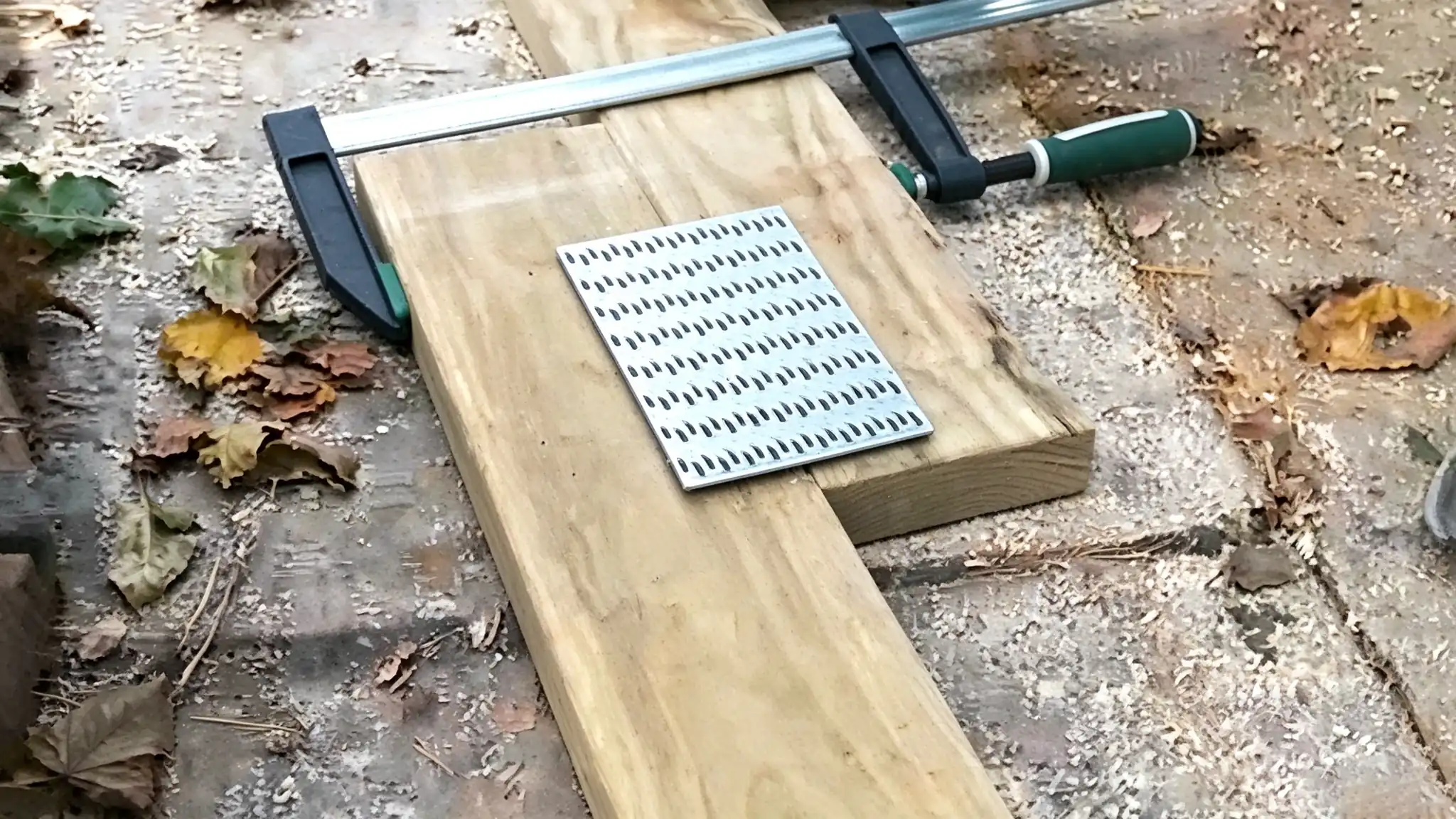
Gently tap the corners and edges of the connector plate with a hammer to gradually embed the metal teeth into the wood.
Use controlled hammer blows to avoid bending the teeth or deforming the plate.
Once the edges are partially secured, continue tapping toward the center of the plate to embed the remaining teeth into the wood.
Avoid striking too hard, as excessive force may bend or distort the plate.
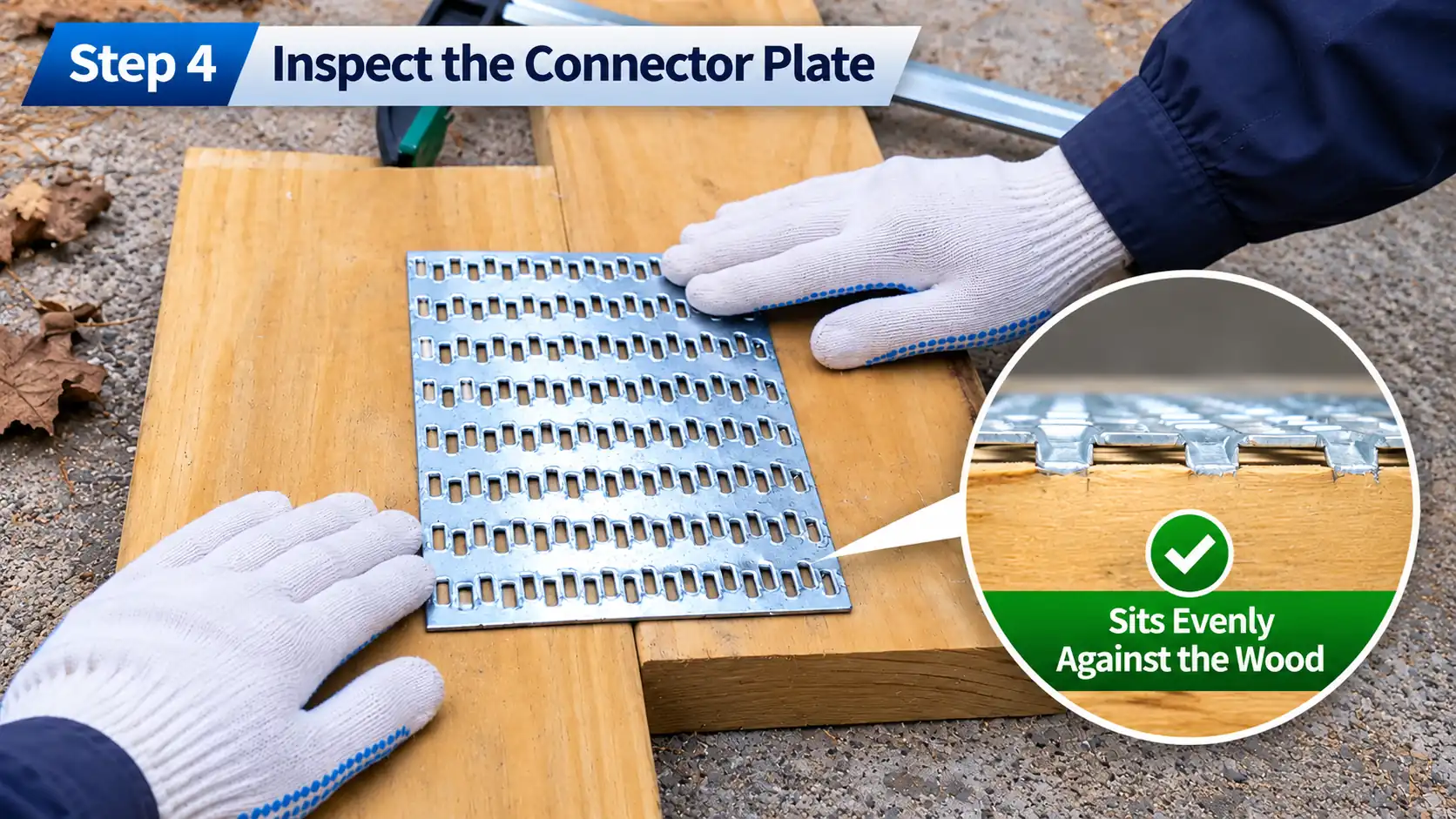
Finally, inspect the edges and center of the connector plate for any raised areas.
Check that the plate sits evenly against the wood without visible gaps or deformation.
NOTE
When installing toothed metal connector plates by hand, pay attention to the arrangement of the metal teeth.
Start with a few light taps, then use controlled, angled hammer blows (glancing blows) rather than striking the plate directly with excessive force. This may help reduce the risk of bending or deforming the plate.
Limitations of Manual Installation
Manual hammering may cause connector plates to bend or deform, especially when excessive or uneven force is applied. However, Hbcrownwealth manufactures high-quality truss connector plates using precision stamping and strict quality control to ensure consistent dimensions and accurate tooth formation.
OEM & CUSTOM MANUFACTURING
Hbcrownwealth supplies precision-stamped metal connectors with reliable quality control. We offer custom sizes, thicknesses, shapes, and tooth configurations for your wood truss applications.
Explore Truss Connector PlatesFrequently Asked Questions
What are the plates that hold trusses together?
The metal plates used to join timber members in prefabricated wood trusses are called truss connector plates. They are also known as metal connector plates, truss plates, or gang nail plates.
Their metal teeth are embedded into the wood to hold the members together and transfer structural loads.
How do you install truss plates?
Truss plates can be installed using two methods: machine installation and manual installation.
Machine Installation: Hydraulic presses or roller presses drive the metal teeth into the wood, creating secure connections between timber members. This method is used in prefabricated wood truss manufacturing.
Manual Installation: For toothed metal plates designed for hammer installation, hand tools can drive the teeth into the wood without specialized pressing equipment. This method is suitable only when the manufacturer permits it.
Can you hammer truss plates?
Some toothed metal plates are designed for hammer installation, but standard structural truss connector plates generally require specialized pressing equipment.
Always check the manufacturer’s installation instructions before choosing an installation method.
Are truss plates stronger than nails?
Yes, truss connector plates can provide stronger connections than individual nails. Their multiple metal teeth distribute loads across a larger area, creating a strong connection between timber members.
Connection strength also depends on the plate specifications, wood properties, and installation method.
What is the difference between a mending plate and a truss plate?
Mending plates are commonly used to join or reinforce wood members in light-duty, non-structural applications. Some can be installed by hammering their metal teeth into the wood.
Structural truss connector plates, however, are designed to transfer loads between timber members and typically require specialized pressing equipment.
